Avoiding pressure washing property damage begins before the technician pulls the trigger.
Pressure washing and soft washing contractors work around concrete, pavers, paint, siding, stucco, roofing, windows, screens, wood, landscaping, pools, vehicles, electrical equipment, and neighbouring property.
Each surface reacts differently to pressure, water, and chemicals. Its age, condition, coating, previous repairs, and exposure to the Central Florida climate can make it more vulnerable than it appears.
One incorrect decision can turn a profitable job into a dispute involving repairs, refunds, lost time, a poor online review, or an insurance claim.
Contractors serving Polk County, Osceola County, and Highlands County need a property protection process that can be repeated on every job.
Why Pressure Washing Property Damage Happens
Property damage usually develops when the cleaning method does not match the surface.
The technician may use too much pressure, hold the nozzle too close, choose the wrong spray pattern, use an unsuitable chemical, overlook oxidation, or fail to recognize an aging coating.
Damage may include:
- Etched or streaked concrete
- Stripped paint or sealant
- Scarred siding
- Damaged stucco
- Splintered wood
- Torn window screens
- Water intrusion around doors or windows
- Damaged roofing materials
- Discolored metal
- Dead or damaged landscaping
- Contaminated pools or water features
- Damage to neighbouring vehicles or property
The condition may not be obvious until the surface dries. That makes inspection, testing, and documentation essential.
Inspect Before Bringing Out the Equipment
A technician should walk the property before connecting hoses or mixing chemicals.
Identify Every Surface
Do not describe the entire project as simply a house wash or driveway cleaning. Record the actual materials being treated.
A property may contain unfinished concrete, sealed pavers, painted stucco, vinyl siding, aluminum trim, wood fencing, decorative metal, glass, screens, tile roofing, and coated pool decking.
Each material may require a different cleaning method.
Look for Existing Conditions
Document conditions such as:
- Faded or loose paint
- Oxidized siding
- Cracked stucco
- Loose mortar
- Damaged seals
- Wood rot
- Fragile screens
- Chipped concrete
- Worn coatings
- Rust or discoloration
- Previous repairs
- Active leaks
Take clear photographs and video. When possible, discuss questionable areas with the customer and document the discussion.
This protects both parties by establishing what existed before the cleaning began.
Match the Method to the Surface
More pressure does not automatically mean a cleaner surface.
The appropriate method depends on the material, condition, cleaning product, nozzle, distance, flow, and experience of the operator.
A technician should not use one pressure setting for an entire property.
Concrete and Pavers
Concrete may appear durable but can still be etched or streaked. Decorative concrete, painted surfaces, sealers, and aging finishes require additional care.
Pavers may contain joint material that can be displaced. Sealed pavers can react differently than unfinished pavers.
Identify the finish and condition before cleaning.
Siding and Stucco
Siding can contain oxidation that changes the appearance when disturbed. Stucco may have cracks, loose paint, or previous water damage.
Water can also be forced into openings around windows, doors, vents, and damaged exterior materials.
Wood and Fencing
Excessive pressure can raise the grain, create visible lines, remove stain, or splinter the surface.
Test the process before cleaning a large area.
Windows, Screens, and Doors
Inspect screens, seals, weather stripping, and existing cracks. Avoid directing concentrated pressure into vulnerable openings.
Close windows and doors before beginning and verify them again during the final inspection.
Always Use a Test Area
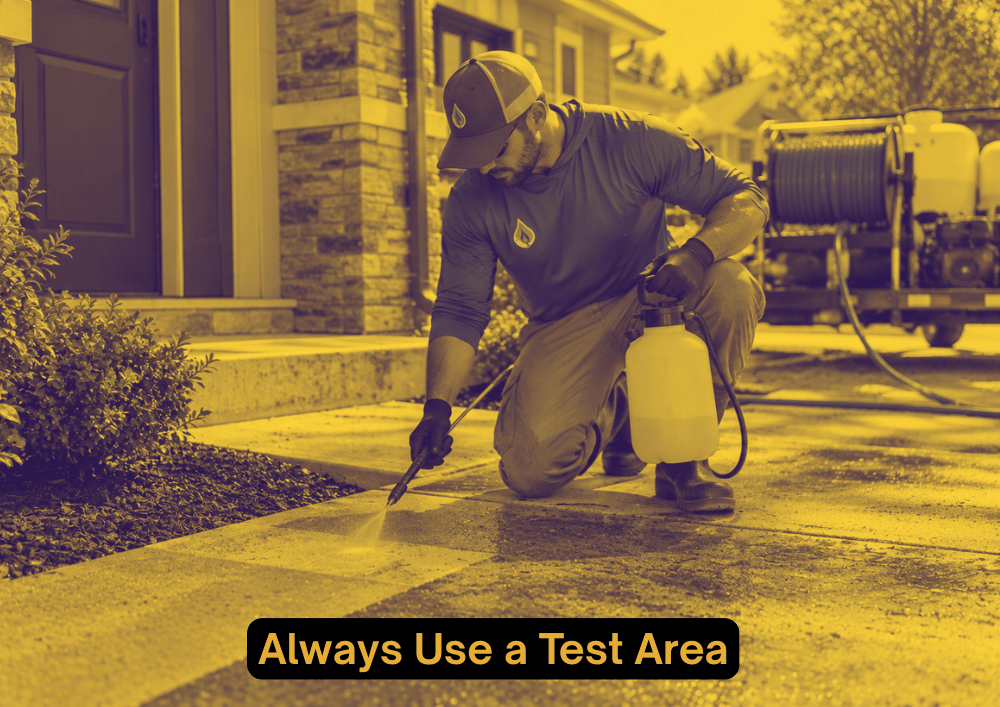
A test area is one of the simplest ways to prevent widespread damage.
Choose a small and less visible location when practical. Apply the planned chemical and cleaning method. Allow enough time to observe the surface, rinse as required, and inspect the result.
Watch for:
- Color changes
- Coating removal
- Etching
- Oxidation removal
- Streaking
- Surface deterioration
- Water intrusion
- Chemical reactions
If the result is unexpected, stop. Do not continue across the property hoping the appearance will improve.
Adjust the process or obtain customer approval before proceeding.
Control Chemicals Carefully
Soft washing reduces the need for high pressure, but it does not eliminate property damage risk.
Chemicals can damage landscaping, paint, metal, fabrics, vehicles, pools, and neighbouring property. Follow the product label, manufacturer instructions, and Safety Data Sheet.
The CDC warns that bleach should not be mixed with other cleaners or disinfectants because the mixture can release dangerous vapours. www.cdc.gov
Every chemical container should be labelled. Employees should understand the approved mixture, intended surface, required protective equipment, and emergency procedure.
Unknown products should never be added to a tank.
Protect the Entire Property
The work area extends beyond the surface being cleaned.
Before beginning:
- Move vehicles and furniture when possible
- Close doors and windows
- Identify electrical equipment
- Protect cameras and sensitive electronics
- Locate pools and water features
- Identify delicate plants
- Control access by children and pets
- Monitor neighbouring property
- Evaluate gutters and downspouts
- Determine where runoff will travel
Wind can carry chemicals beyond the intended area. Conditions should be monitored throughout the job, especially during roof and elevated applications.
Control Runoff
Pressure washing water can carry dirt, chemicals, oils, paint particles, and sediment across driveways and parking lots.
The EPA explains that runoff moving over paved surfaces can collect chemicals and sediment before reaching streams, lakes, or groundwater. US EPA
The Florida Department of Environmental Protection also explains that stormwater can collect pollutants that harm rivers, lakes, and estuaries. floridadep.gov
Do not assume wash water may enter a storm drain. Applicable requirements can depend on the location, drainage system, contaminants, chemicals, property type, and local government.
This is especially important around the lakes, canals, and drainage systems found throughout Lakeland, Winter Haven, Kissimmee, St. Cloud, Sebring, Avon Park, and Lake Placid.
Train Employees to Stop
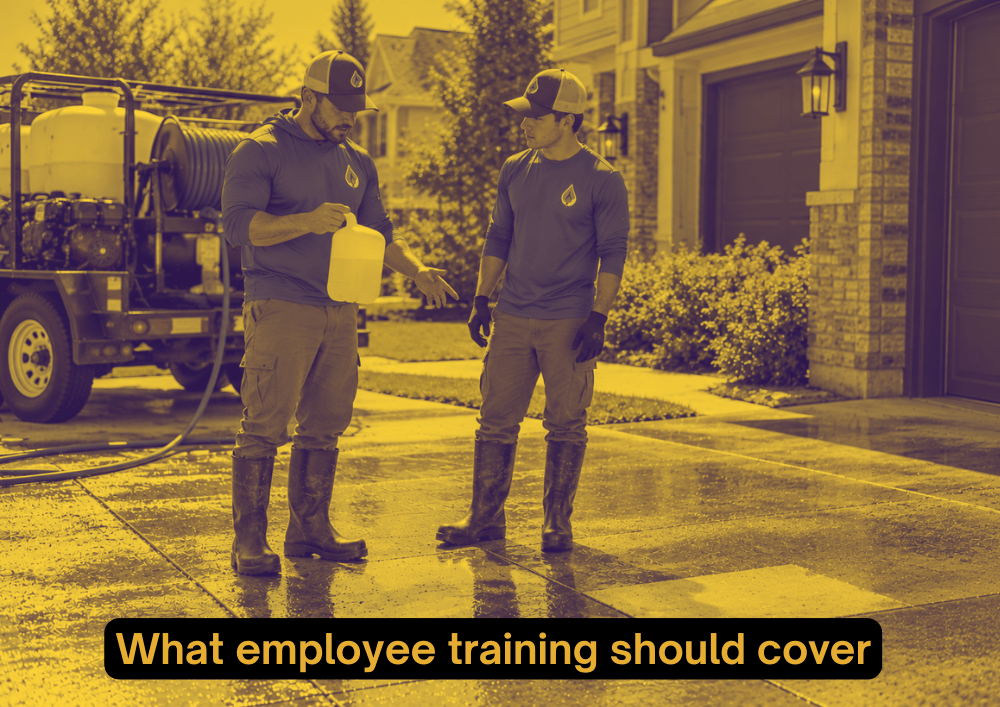
Employees should understand that completing the job quickly is not more important than protecting the property.
Training should cover:
- Surface identification
- Pressure and nozzle selection
- Equipment inspection
- Chemical labels and Safety Data Sheets
- Test areas
- Oxidation and coating recognition
- Landscaping protection
- Runoff control
- Customer communication
- Incident reporting
- Documentation
- Stop work authority
A technician who notices an unexpected surface reaction should stop immediately and notify management.
Document the Completed Job
Complete a final walkthrough before leaving.
Photograph cleaned surfaces, landscaping, windows, doors, vehicles, and any areas discussed with the customer.
A job record should include:
- Customer and property address
- Date and time
- Weather conditions
- Surfaces cleaned
- Existing damage
- Products and mixtures used
- Equipment settings or methods
- Test area results
- Property protection used
- Before and after photographs
- Employee names
- Customer instructions
- Complaints or unusual conditions
- Final inspection
Consistent documentation makes it easier to review a complaint and improve future procedures.
How Insurance May Respond
General Liability
General liability may respond to certain covered allegations of third party bodily injury or property damage.
Examples may include damaged siding, etched concrete, broken windows, dead landscaping, water intrusion, or damage to neighbouring property.
Coverage depends on the policy language, exclusions, endorsements, limits, deductibles, and facts of the loss. Contractors should review restrictions involving chemicals, overspray, pollution, work performed on roofing, and damage to the particular property being worked on.
Commercial Auto
Commercial auto may respond to covered accidents involving company vehicles.
Tanks, hoses, ladders, chemicals, and equipment should be secured during transportation. Personal auto insurance should not be assumed to cover regular business use.
Workers’ Compensation
Workers’ compensation may apply when an employee suffers a covered chemical exposure, eye injury, fall, heat illness, injection injury, or other work related injury.
Equipment Coverage
Inland marine or contractors equipment coverage may protect eligible pressure washers, pumps, tanks, hoses, surface cleaners, trailers, and other mobile equipment.
Coverage depends on the scheduled property, limits, deductibles, causes of loss, and exclusions.
Common Property Damage Mistakes
Using One Setting Everywhere
Different surfaces and conditions require different methods.
Skipping the Test Area
A small test can reveal an unsuitable process before damage spreads.
Ignoring Oxidation
Oxidized siding or paint can change appearance when cleaned.
Failing to Photograph Existing Damage
Without photographs, it may be difficult to separate prior damage from a new complaint.
Using Unlabelled Chemicals
Employees cannot safely select or mix a product they cannot identify.
Overlooking Windows and Screens
Damaged seals, open windows, and fragile screens can lead to interior water damage.
Ignoring Neighbouring Property
Wind and runoff do not stop at the customer’s property line.
Leaving Without a Final Inspection
Damage or an unresolved condition is easier to address before the crew leaves.
Action Steps for Contractors
1. Create a Surface Inspection Form
List every surface, its condition, existing damage, and proposed cleaning method.
2. Require Before and After Photographs
Create a standard list of required pictures for every job.
3. Establish Testing Procedures
Define when and where employees must perform a test area.
4. Create Approved Cleaning Methods
Provide written guidance for common surfaces and products.
5. Label Every Chemical
Maintain current product labels and Safety Data Sheets.
6. Develop Property Protection Procedures
Address vehicles, windows, screens, electronics, landscaping, pools, pets, and neighbouring property.
7. Give Employees Stop Work Authority
Employees should stop when the surface reacts unexpectedly or conditions cannot be controlled.
8. Review Insurance Annually
Confirm that the carrier understands the company’s services, chemicals, employees, vehicles, equipment, roof work, and maximum working height.
Frequently Asked Questions
1. Can Pressure Washing Damage Concrete?
Yes. Concrete can be etched, streaked, or damaged when the pressure, nozzle, distance, or cleaning method is unsuitable. Coated, painted, decorative, or deteriorated concrete requires additional evaluation.
2. Why Is a Test Area Important?
A test area helps identify color changes, coating failure, oxidation, etching, or other reactions before the process is used across the entire surface.
3. Can Soft Washing Cause Property Damage?
Yes. Lower pressure does not eliminate chemical damage, overspray, runoff, water intrusion, or surface compatibility concerns.
4. Does General Liability Cover Pressure Washing Damage?
It may respond to certain covered property damage allegations. Coverage depends on the exact policy language, exclusions, endorsements, deductible, and circumstances.
5. What Should a Contractor Photograph?
Photograph every surface being cleaned, existing damage, neighbouring property, vehicles, landscaping, windows, doors, protective measures, test areas, and the completed work.
Protect the Property and the Business
Avoiding pressure washing property damage requires more than careful spraying.
Contractors need a system for identifying surfaces, documenting conditions, choosing the correct method, testing unfamiliar areas, controlling chemicals, protecting nearby property, monitoring runoff, and completing a final inspection.
Pressure washing and soft wash contractors serving Lakeland, Winter Haven, Haines City, Davenport, Kissimmee, St. Cloud, Sebring, Avon Park, Lake Placid, and surrounding Central Florida communities should build these steps into every job.
Wise Insurance Agency helps contractors review how their actual operations connect with general liability, commercial auto, workers’ compensation, and equipment coverage.
Remember, follow Wise Insurance for more tips, tricks, and insurance insights. If you want to make sure your coverage is protecting you the way it should, call us at 863 534 3431 or message us for a policy review.
Coverage depends on policy language, endorsements, exclusions, limits, deductibles, and the circumstances of each claim.
Sources
Centers for Disease Control and Prevention: Cleaning and Disinfecting With Bleach: https://www.cdc.gov/hygiene/about/cleaning-and-disinfecting-with-bleach.html?
United States Environmental Protection Agency: Urbanization and Stormwater Runoff: https://www.epa.gov/sourcewaterprotection/urbanization-and-stormwater-runoff
Florida Department of Environmental Protection: Stormwater Program: https://floridadep.gov/water/stormwater