If you own a home in Central Florida, you probably know homeowners insurance is important. But if someone asked you to explain exactly what your policy covers, could you?
Many homeowners can’t.
A homeowners policy contains several different coverages, limits, deductibles, exclusions, and endorsements.
Understanding them before you have a claim is especially important in Florida, where homeowners have to consider hurricanes, wind damage, flooding, water losses, roof issues, and changing rebuilding costs.
Whether your home is in Lakeland, Winter Haven, Haines City, Davenport, Kissimmee, St. Cloud, Sebring, Avon Park, Lake Placid, or another Central Florida community, here are the major parts of a homeowners insurance policy explained in plain English.
Coverage A: Dwelling Coverage
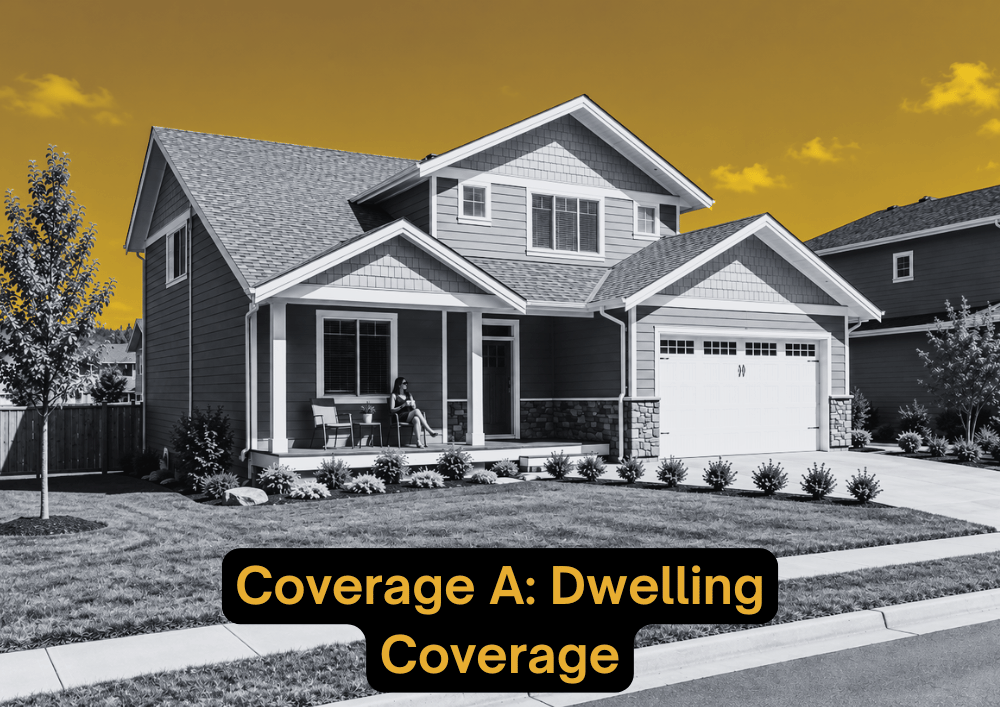
Dwelling Coverage protects the physical structure of your home against covered losses.
This generally includes major parts of the house itself, such as:
- Roof
- Walls
- Floors
- Built in cabinets
- Plumbing
- Electrical systems
- Attached structures
One of the most common misconceptions is that your dwelling coverage should equal the market value of your house.
Those are two different numbers.
Your home’s market value can include factors such as the value of your land, neighborhood, location, and current real estate market.
Your dwelling coverage is intended to address the cost of repairing or rebuilding the insured structure after a covered loss.
That distinction is particularly important as construction costs change.
Why Central Florida Homeowners Should Review Coverage A
If you’ve remodeled your kitchen, added square footage, completed a major renovation, or made other substantial improvements, tell your insurance agent.
Your existing dwelling limit may no longer accurately reflect your home.
Coverage B: Other Structures
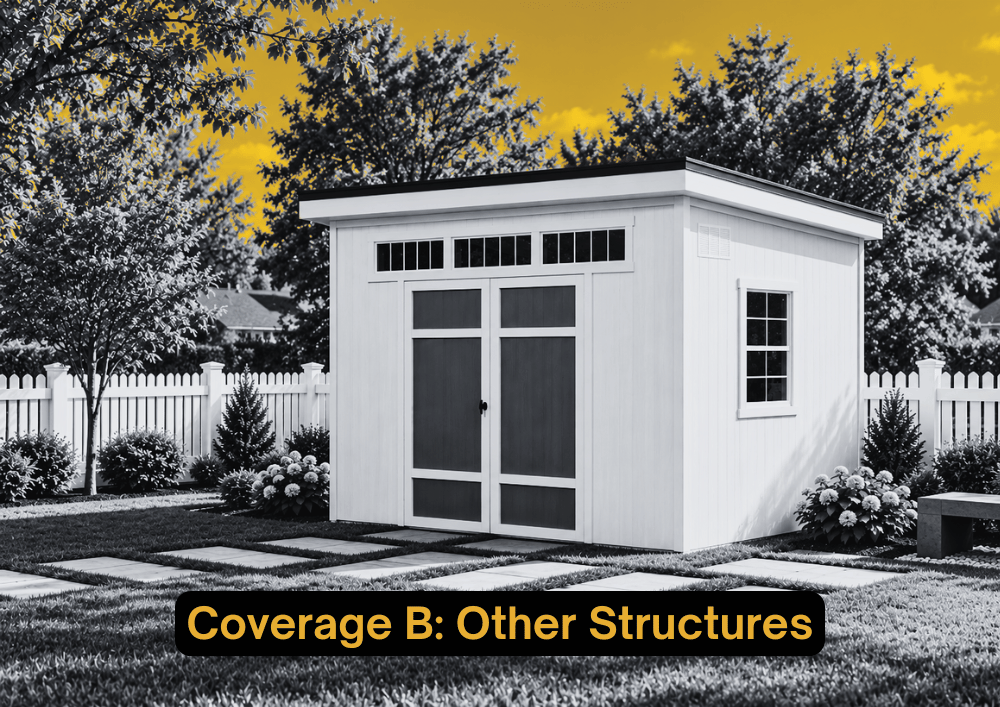
Coverage B is generally called Other Structures Coverage.
It can provide coverage for qualifying structures on your property that aren’t attached to your home.
Examples may include:
- Detached garages
- Sheds
- Fences
- Gazebos
- Certain swimming pool related structures
Your specific policy controls what is and isn’t covered.
This matters in Central Florida because homeowners frequently add sheds, fencing, detached workshops, and other improvements after purchasing their homes.
Don’t automatically assume every structure on your property has sufficient coverage.
Coverage C: Personal Property
Coverage C protects your personal belongings against covered losses.
An easy way to understand personal property is to imagine removing the structure itself.
The furniture, clothing, electronics, appliances, and many other belongings inside are your personal property.
But there are important limitations.
Homeowners policies may limit coverage for certain valuable property, such as jewelry, antiques, firearms, silverware, and other categories.
If you own expensive jewelry, collectibles, artwork, or other high value items, ask your agent whether your standard personal property limits are sufficient or whether the items should be separately scheduled.
Replacement Cost vs. Actual Cash Value
This is another important distinction.
Replacement Cost generally looks at the cost of replacing an item with a comparable new item.
Actual Cash Value takes depreciation into consideration.
That difference can significantly affect how much you receive following a covered loss.
Review how your policy settles personal property claims rather than assuming everything is covered at replacement cost.
Coverage D: Loss of Use
What happens if a covered claim makes your home temporarily unlivable?
That’s where Coverage D, Loss of Use, can become important.
It’s also commonly referred to as Additional Living Expense.
Imagine a covered fire causes significant damage to your home in Winter Haven.
Repairs will take months, and your family has to temporarily live somewhere else.
Subject to your policy’s terms and limits, Loss of Use coverage may reimburse you for qualifying additional expenses associated with being displaced while your home is repaired or rebuilt.
This coverage can be easy to overlook because homeowners naturally focus on rebuilding the house.
But losing the ability to live in your home can create significant expenses of its own.
Coverage E: Personal Liability
Your homeowners policy doesn’t only protect your physical property.
Coverage E provides Personal Liability Coverage.
For example, suppose someone visits your Lakeland home, slips on your property, suffers a serious injury, and claims you were legally responsible.
Your Personal Liability Coverage may help respond to a covered claim or lawsuit, up to your policy limits.
Liability coverage can also apply to certain covered property damage claims for which you or an insured family member is legally responsible.
Is Your Liability Limit Enough?
Homeowners should consider what they have to protect.
As your income, savings, property, and other assets grow, your liability insurance deserves another look.
Some homeowners may also benefit from a personal umbrella policy, which can provide additional liability protection above qualifying underlying home and auto policies.
Coverage F: Medical Payments to Others
Coverage F is Medical Payments to Others.
This coverage can help pay certain medical expenses when a guest is accidentally injured at your home, regardless of fault, subject to the policy limit.
For example, a guest trips on your stairs and needs medical attention.
Medical Payments coverage may help address qualifying medical bills even when you aren’t legally liable for the accident.
This coverage is different from Personal Liability and generally has a much smaller limit.
What Doesn’t Homeowners Insurance Cover?
Understanding your exclusions is just as important as understanding your coverage.
A homeowners policy doesn’t cover everything that can damage your house.
Flooding
One of the biggest misconceptions in Florida is that homeowners insurance automatically covers flooding.
It generally doesn’t.
Standard homeowners insurance does not cover flood damage.
Separate flood insurance may be necessary.
That matters even if you don’t think of your home as being in a high risk flood area.
Heavy rainfall and surface water can create flooding concerns throughout Florida, including inland areas of Polk County, Osceola County, and Highlands County.
Water Backup
Flooding and water backup aren’t necessarily the same thing.
Some homeowners policies do not automatically cover damage caused by water backing up through a sewer or drain.
Water backup coverage may be available through an endorsement.
This is why simply asking, “Do I have water coverage?” isn’t specific enough.
Ask what types of water losses your particular policy covers and excludes.
Florida Hurricane Coverage and Your Deductible
Florida homeowners also need to understand their hurricane deductible.
Your hurricane deductible may be different from your regular All Other Perils deductible.
For example, suppose your home has $400,000 of dwelling coverage and a 2% hurricane deductible.
Two percent of $400,000 is $8,000.
That’s very different from assuming you have a standard $1,000 or $2,500 deductible.
Your actual deductible will be shown on your policy declarations and is subject to your policy terms.
Before hurricane season, find that number and understand what it means in actual dollars.
Don’t Forget About Your Roof
Your roof can significantly affect your Florida homeowners insurance.
Homeowners should understand:
- How their roof is covered
- Whether losses are settled at replacement cost or another valuation method
- Whether a separate roof deductible applies
- What exclusions or limitations exist
- Whether wind and hurricane coverage are included
- Whether the policy contains age related roof provisions
Never assume one homeowners policy handles roofs exactly like another.
Pool Cages and Screened Enclosures
This is especially relevant in Central Florida.
You may have a beautiful pool and screened enclosure behind your Davenport, Kissimmee, Winter Haven, or Lakeland home, but don’t assume the entire structure automatically has full hurricane coverage.
Some insurers limit or exclude coverage for screened enclosures and may offer additional coverage by endorsement.
If you have a pool cage, screened enclosure, awning, or aluminum framed structure, ask specifically how your policy treats it.
COMMON HOMEOWNERS INSURANCE MISTAKES
Mistake 1: Shopping Only by Price
Saving money is great.
Saving $300 and unknowingly giving up thousands of dollars in valuable coverage isn’t.
Compare coverage, deductibles, exclusions, and endorsements along with premium.
Mistake 2: Assuming Flood Is Included
Homeowners insurance and flood insurance are separate coverages.
Ask about flood insurance before you need it.
Mistake 3: Ignoring the Hurricane Deductible
A percentage deductible can represent thousands of dollars.
Know the actual dollar amount you’d be responsible for.
Mistake 4: Never Updating Your Policy
Did you remodel?
Add a pool?
Build a detached garage?
Buy expensive jewelry?
Make major upgrades?
Your insurance agent can’t account for changes they don’t know about.
Mistake 5: Assuming Every Homeowners Policy Is the Same
Policies can contain different exclusions, endorsements, deductibles, and settlement provisions.
Review your policy and declarations page.
5 ACTION STEPS FOR CENTRAL FLORIDA HOMEOWNERS
1. Find Your Declarations Page
Review Coverages A, B, C, D, E, and F.
2. Check Your Deductibles
Look specifically for your hurricane deductible and All Other Perils deductible.
3. Review Your Dwelling Limit
Ask whether the estimated rebuilding cost still accurately reflects your home.
4. Identify Potential Gaps
Ask about flood insurance, water backup, screened enclosures, valuable personal property, roof coverage, and other exposures specific to your home.
5. Review Your Policy Annually
Your home changes.
Construction costs change.
Your assets change.
Your insurance should be reviewed along with them.
FREQUENTLY ASKED QUESTIONS
1. Does homeowners insurance cover hurricane damage in Florida?
Homeowners policies may provide coverage for windstorm damage caused by hurricanes, depending on the policy.
Florida homeowners should review whether wind coverage is included and understand the separate hurricane deductible that may apply.
2. Does homeowners insurance cover flooding?
Standard homeowners insurance does not cover flood damage.
Flood insurance is generally purchased separately.
3. How much dwelling coverage should I have?
The appropriate amount depends largely on the estimated cost to rebuild the insured home rather than simply its real estate market value.
A replacement cost estimate can help determine an appropriate amount.
4. Does homeowners insurance cover my belongings?
Coverage C generally provides Personal Property Coverage for covered losses, but limits and exclusions apply.
Certain valuable items may have special limits and may require additional coverage.
5. What Is the Difference Between Homeowners Insurance and an Umbrella Policy?
Homeowners insurance includes a Personal Liability limit.
A Personal Umbrella Policy can provide additional liability protection above qualifying underlying policies, including homeowners and auto insurance, subject to its own terms and exclusions.
FINAL CALL TO ACTION
Homeowners insurance shouldn’t be something you think about only when the renewal bill arrives.
If you own a home in Polk County, Osceola County, or Highlands County, take a few minutes to understand what you’re actually buying.
For homeowners in Lakeland, Winter Haven, Haines City, Davenport, Kissimmee, St. Cloud, Sebring, Avon Park, Lake Placid, and surrounding Central Florida communities, Wise Insurance can help you review your current policy and identify questions worth asking.
Our goal isn’t simply to sell you another policy.
It’s to help you understand the coverage you already have, identify potential gaps, and determine whether your insurance still fits your home and your needs.
Remember, follow Wise Insurance for more tips, tricks, and insurance insights. And if you want to make sure your coverage is protecting you the way it should, give us a call for a policy review at 863 534 3431 or message us on the platform you are watching this on.