Full Coverage Auto Insurance in Florida: What Does It Really Mean?
If you ask for full coverage auto insurance in Florida, you may assume you are purchasing a policy that covers nearly every possible accident, injury, or expense.
That is not what the phrase means.
“Full coverage” is not one specific coverage, and there is no standardized full coverage policy. The Florida Department of Financial Services warns consumers that what one person considers full coverage may differ from what another person considers full coverage.
Source: Florida Department of Financial Services, Personal Automobile Insurance Overview
https://www.myfloridacfo.com/division/consumers/understanding-insurance/personal-automobile-insurance-overview
The phrase is commonly used to describe an auto policy containing liability coverage, comprehensive coverage, and collision coverage. However, it does not tell you the limits, deductibles, exclusions, or optional protections included.
Two drivers in Lakeland can both say they have full coverage and still possess substantially different policies.
One may have strong bodily injury liability limits, uninsured motorist coverage, $500 physical damage deductibles, rental reimbursement, and roadside assistance.
The other may carry low liability limits, no uninsured motorist coverage, $1,000 deductibles, and no rental reimbursement.
Understanding the individual parts of your policy is more important than relying on the phrase “full coverage.”
What Auto Insurance Does Florida Require?
Most owners of Florida registered vehicles must carry at least:
- $10,000 in personal injury protection
- $10,000 in property damage liability
Florida Highway Safety and Motor Vehicles explains that this coverage must remain in place continuously throughout the vehicle’s registration period.
Source: Florida Highway Safety and Motor Vehicles, Florida Insurance Requirements
https://www.flhsmv.gov/insurance/
These minimum requirements should not be confused with complete financial protection.
A driver may satisfy the basic registration requirements and still face a significant financial exposure after causing a serious accident.
What Does Personal Injury Protection Cover?
Personal injury protection is commonly called PIP.
Florida Highway Safety and Motor Vehicles states that PIP generally covers 80 percent of necessary and reasonable medical expenses up to $10,000 resulting from a covered injury, regardless of who caused the crash. The actual amount available can depend on the injury and policy terms.
Source: Florida Highway Safety and Motor Vehicles, Florida Insurance Requirements
https://www.flhsmv.gov/insurance/
PIP is not the same as bodily injury liability.
PIP addresses certain covered losses involving you and other people insured under the policy. Bodily injury liability addresses covered injuries you are legally responsible for causing to someone else.
What Does Property Damage Liability Cover?
Property damage liability can pay for covered damage you cause to property owned by someone else.
That could include another vehicle, fence, building, mailbox, guardrail, or other property.
Florida’s basic required limit is $10,000 per accident for most registered vehicles.
Consider a driver who causes an accident on US 27 near Haines City and totals a newer SUV. A $10,000 property damage limit may not be enough to pay for the other vehicle and additional property damaged in the accident.
Once the policy limit is exhausted, the responsible driver could face personal financial exposure for the remaining amount.
Choosing a liability limit should involve more than meeting the minimum requirement. Consider your income, savings, property, driving habits, household drivers, and the cost of vehicles sharing Central Florida roads.
Is Bodily Injury Liability Included in Full Coverage?
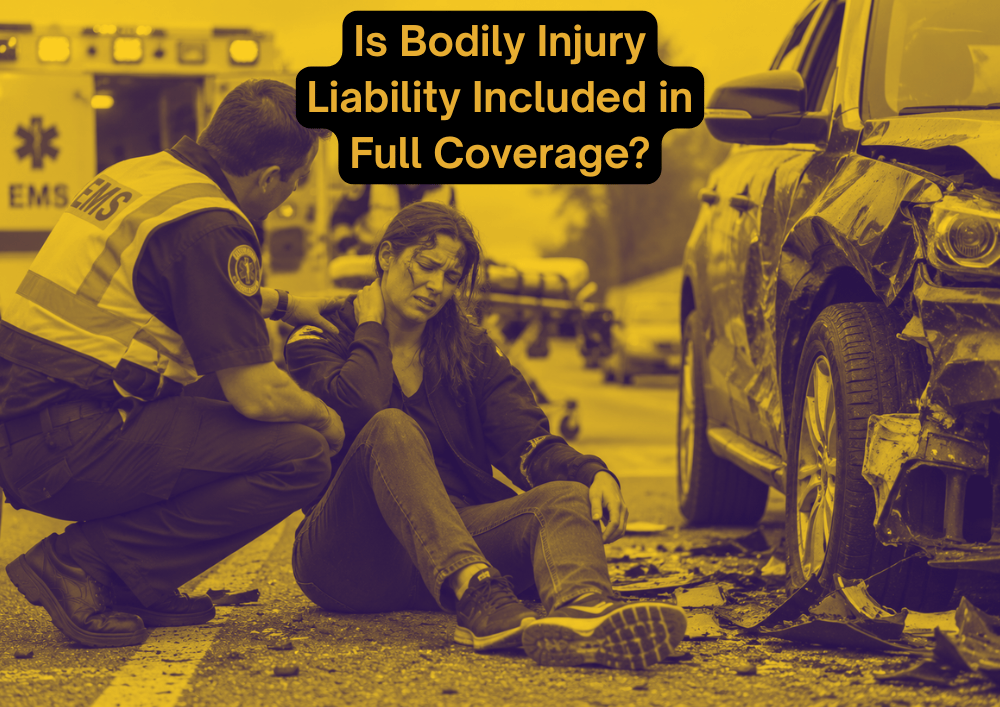
Bodily injury liability is often included when people discuss full coverage, but the phrase alone does not confirm the coverage or its limits.
Bodily injury liability may help protect you when you are legally responsible for injuring or killing another person in a covered accident. It can address covered medical expenses, lost wages, legal expenses, and settlements, subject to the policy.
Florida does not generally require every private vehicle owner to maintain bodily injury liability solely to register a standard vehicle. However, bodily injury requirements can apply following certain crashes, violations, or circumstances.
This is an important reason not to confuse Florida’s basic registration requirements with an adequately designed auto insurance program.
What Is Uninsured Motorist Coverage?
Uninsured motorist coverage may protect insured people who are injured by an at fault driver who has no bodily injury liability coverage.
Underinsured motorist coverage may apply when the responsible driver has bodily injury liability insurance, but the limit is not enough to address the covered injuries.
This coverage focuses on injuries, not damage to your vehicle.
Imagine that a driver in Kissimmee runs a red light and seriously injures you. The other driver has only a small bodily injury liability limit or no applicable bodily injury coverage.
Your own uninsured or underinsured motorist coverage may become an important source of protection, depending on the policy and accident.
Do not assume this coverage is included simply because someone described your policy as full coverage. Confirm it on the declarations page.
What Is Collision Coverage?
Collision coverage helps pay for covered damage to your vehicle caused by a collision with another vehicle or object. It can also apply when the insured vehicle overturns, subject to the policy.
The National Association of Insurance Commissioners explains that collision coverage applies to physical damage caused by colliding with another vehicle or an object.
Source: National Association of Insurance Commissioners, Auto Insurance Coverage
https://content.naic.org/article/what-you-should-know-about-auto-insurance-coverage
Examples may include:
- Rear ending another vehicle in Winter Haven
- Backing into a concrete post
- Hitting a guardrail during heavy rain
- Colliding with a tree
- Overturning the vehicle
Collision coverage normally includes a deductible. If you have a $1,000 deductible and a covered accident causes $6,000 in damage, you would generally be responsible for the first $1,000 before the applicable insurance payment.
What Is Comprehensive Coverage?
Comprehensive coverage is also called other than collision coverage.
It generally addresses covered vehicle damage caused by events other than a collision. Depending on the policy, this may include:
- Theft
- Vandalism
- Fire
- Hail
- Windstorm
- Flooding
- Falling objects
- Animal damage
- Broken glass
The National Association of Insurance Commissioners explains that comprehensive coverage can address noncollision losses such as theft, hail, windstorm, flood, fire, and contact with an animal.
Source: National Association of Insurance Commissioners, Auto Insurance Coverage
https://content.naic.org/article/what-you-should-know-about-auto-insurance-coverage
This coverage can be especially important in Central Florida.
A hurricane may send a tree limb onto a vehicle in Sebring. Floodwater may damage a parked vehicle in St. Cloud. Hail may damage a vehicle in Avon Park. A deer may run into the road near Lake Placid.
Coverage depends on the actual cause of loss, policy language, exclusions, deductible, and circumstances.
Does a Financed Vehicle Need Full Coverage?
A lender or leasing company will generally require comprehensive and collision coverage to protect its financial interest in the vehicle.
The National Association of Insurance Commissioners explains that collision and comprehensive coverage are not generally required by state law, but a lender or leasing company may require them.
Source: National Association of Insurance Commissioners, Auto Insurance
https://content.naic.org/consumer/auto-insurance.htm
Meeting a lender’s requirements does not automatically mean the policy includes every protection you may need.
The lender is primarily concerned with protecting the financed vehicle. Its requirements may not address whether your liability limits are appropriate, whether you have uninsured motorist coverage, or whether you have rental reimbursement.
If required insurance lapses, a lender may purchase force placed insurance and charge the borrower. The Consumer Financial Protection Bureau warns that this coverage generally protects the lender rather than the borrower and is usually more expensive than coverage obtained independently.
Source: Consumer Financial Protection Bureau, Force Placed Insurance
https://www.consumerfinance.gov/ask-cfpb/what-is-force-placed-insurance-en-827/
What May Not Be Included in Full Coverage?
The term full coverage does not confirm that the following protections are included:
Rental Reimbursement
Rental reimbursement can help pay for temporary transportation while your covered vehicle is being repaired after an applicable loss.
It normally has a daily limit and maximum benefit. Renting a vehicle for routine maintenance or mechanical breakdown is generally not the purpose of this coverage.
Roadside Assistance
Roadside assistance may provide services such as towing, battery assistance, tire changes, lockout help, or fuel delivery, subject to the policy and service limits.
Medical Payments Coverage
Medical payments coverage may help with covered medical or funeral expenses for insured people, subject to the policy. It is separate from PIP and bodily injury liability.
GAP Coverage
GAP protection is intended to address some or all of the difference between the vehicle’s covered insurance value and the remaining loan balance when a financed vehicle is stolen or declared a total loss.
The Consumer Financial Protection Bureau explains that GAP is an optional product designed for situations in which the loan balance exceeds the amount paid for a stolen or totaled vehicle.
Source: Consumer Financial Protection Bureau, Guaranteed Asset Protection
https://www.consumerfinance.gov/ask-cfpb/what-is-guaranteed-asset-protection-gap-insurance-en-797/
GAP protection may have limits, exclusions, cancellation provisions, and eligibility requirements. It may be available through an insurance company, dealership, lender, or separate provider.
Original Equipment Manufacturer Parts
OEM parts coverage may address the use of qualifying original manufacturer parts during covered repairs. Availability and conditions vary by carrier.
New Car Replacement
New car replacement coverage may provide an enhanced settlement when a qualifying newer vehicle is totaled. Vehicle age, mileage, ownership, and policy requirements vary.
Accident Forgiveness
Accident forgiveness may prevent a qualifying accident from affecting the policy in a particular way. It does not erase the accident or guarantee that the overall premium will remain unchanged.
Common Full Coverage Mistakes
Assuming Everything Is Covered
No auto policy covers every possible event, vehicle use, driver, or expense.
Carrying Minimum Liability Limits With an Expensive Vehicle
Physical damage coverage protects the insured vehicle. It does not increase the amount available for injuries or property damage caused to others.
Rejecting Uninsured Motorist Coverage Without Understanding It
Collision coverage protects the vehicle. Uninsured motorist coverage addresses covered bodily injuries caused by drivers who lack sufficient bodily injury liability coverage.
Forgetting Rental Reimbursement
Comprehensive and collision coverage do not automatically guarantee rental coverage.
Choosing a Deductible You Cannot Afford
A higher deductible may reduce the premium, but you must be prepared to pay it after a covered loss.
Assuming GAP Is Automatically Included
GAP is generally a separate product or optional coverage.
Keeping the Same Coverage as the Vehicle Changes
A new financed vehicle, an older paid off vehicle, or a vehicle used by a youthful driver may require a different coverage strategy.
Action Steps for Florida Drivers
1. Review Your Declarations Page
Confirm every coverage, limit, deductible, driver, and vehicle.
2. Review Liability Limits
Consider whether your bodily injury and property damage limits are appropriate for your assets and potential exposure.
3. Confirm Uninsured Motorist Coverage
Determine whether it is included, its limit, and whether it is stacked or nonstacked.
4. Check Physical Damage Deductibles
Make sure you could comfortably pay the comprehensive and collision deductibles.
5. Confirm Transportation Coverage
Determine whether rental reimbursement is included and whether its daily limit is realistic.
6. Review Your Loan Balance
If you owe more than the vehicle may be worth, ask whether GAP protection is appropriate.
7. Update Household Information
Report regular drivers, licensed household members, vehicle locations, and changes in vehicle use accurately.
8. Request a Policy Review
Ask your agent to explain your policy without using the phrase full coverage as the final answer.
Frequently Asked Questions
1. Is Full Coverage a Real Insurance Coverage?
No. It is an informal phrase commonly used to describe a combination of coverages. Your declarations page identifies the actual protection purchased.
2. Does Full Coverage Pay for Every Accident?
No. Coverage depends on the cause of loss, policy language, exclusions, limits, deductibles, drivers, vehicles, and circumstances.
3. Does Full Coverage Include Rental Reimbursement?
Not automatically. Rental reimbursement is usually a separate optional coverage that must appear on the policy.
4. Do I Need Comprehensive and Collision on a Paid Off Vehicle?
Florida law generally does not require them. Whether keeping them makes sense depends on the vehicle’s value, premium, deductibles, and your ability to replace or repair the vehicle personally.
5. Does Full Coverage Include GAP Protection?
Not automatically. GAP protection is generally a separate product or optional coverage intended to address certain differences between a totalled vehicle’s value and the remaining loan balance.
Understand What You Are Actually Buying

Full coverage auto insurance in Florida is not one product, limit, or guarantee.
Your real protection comes from the individual coverages selected, the limits purchased, the deductibles chosen, and the endorsements included.
Drivers throughout Lakeland, Bartow, Winter Haven, Haines City, Davenport, Kissimmee, St. Cloud, Sebring, Avon Park, Lake Placid, and surrounding Central Florida communities should review their policies before an accident reveals a misunderstanding.
Wise Insurance Agency can help you review your personal injury protection, property damage liability, bodily injury liability, uninsured motorist coverage, comprehensive coverage, collision coverage, deductibles, rental reimbursement, roadside assistance, and other available options.
Remember, follow Wise Insurance for more tips, tricks, and insurance insights. If you want to make sure your coverage is protecting you the way it should, call us at 863 534 3431 or message us for a policy review.
Coverage depends on the policy language, endorsements, exclusions, limits, deductibles, drivers, vehicles, and circumstances of each claim.
Complete Sources
Florida Department of Financial Services, Personal Automobile Insurance Overview
https://www.myfloridacfo.com/division/consumers/understanding-insurance/personal-automobile-insurance-overview
Florida Highway Safety and Motor Vehicles, Florida Insurance Requirements
https://www.flhsmv.gov/insurance/
National Association of Insurance Commissioners, What You Should Know About Auto Insurance Coverage
https://content.naic.org/article/what-you-should-know-about-auto-insurance-coverage
National Association of Insurance Commissioners, Auto Insurance
https://content.naic.org/consumer/auto-insurance.htm
Consumer Financial Protection Bureau, What Is Force Placed Insurance?
https://www.consumerfinance.gov/ask-cfpb/what-is-force-placed-insurance-en-827/
Consumer Financial Protection Bureau, What Is Guaranteed Asset Protection Insurance?
https://www.consumerfinance.gov/ask-cfpb/what-is-guaranteed-asset-protection-gap-insurance-en-797/