Refrigerant risks for HVAC contractors extend far beyond the cost of replacing lost refrigerant.
One incorrectly charged system, improperly recovered refrigerant, unsecured cylinder, or incomplete service record can lead to damaged equipment, employee injuries, customer complaints, EPA compliance questions, expensive callbacks, and insurance coverage disputes.
These risks are especially important for HVAC contractors serving Polk County, Osceola County, and Highlands County.
Air conditioning systems work hard throughout Lakeland, Winter Haven, Haines City, Davenport, Kissimmee, St. Cloud, Sebring, Avon Park, Lake Placid, and surrounding Central Florida communities.
High service volume creates opportunity, but it also increases the chance that a rushed procedure or documentation mistake will become an expensive problem.
The answer is a consistent refrigerant management process combining technician qualifications, safety training, proper recovery, cylinder control, detailed documentation, and the right insurance program.
Why A Refrigerant Leak Is a Serious HVAC Business Risk
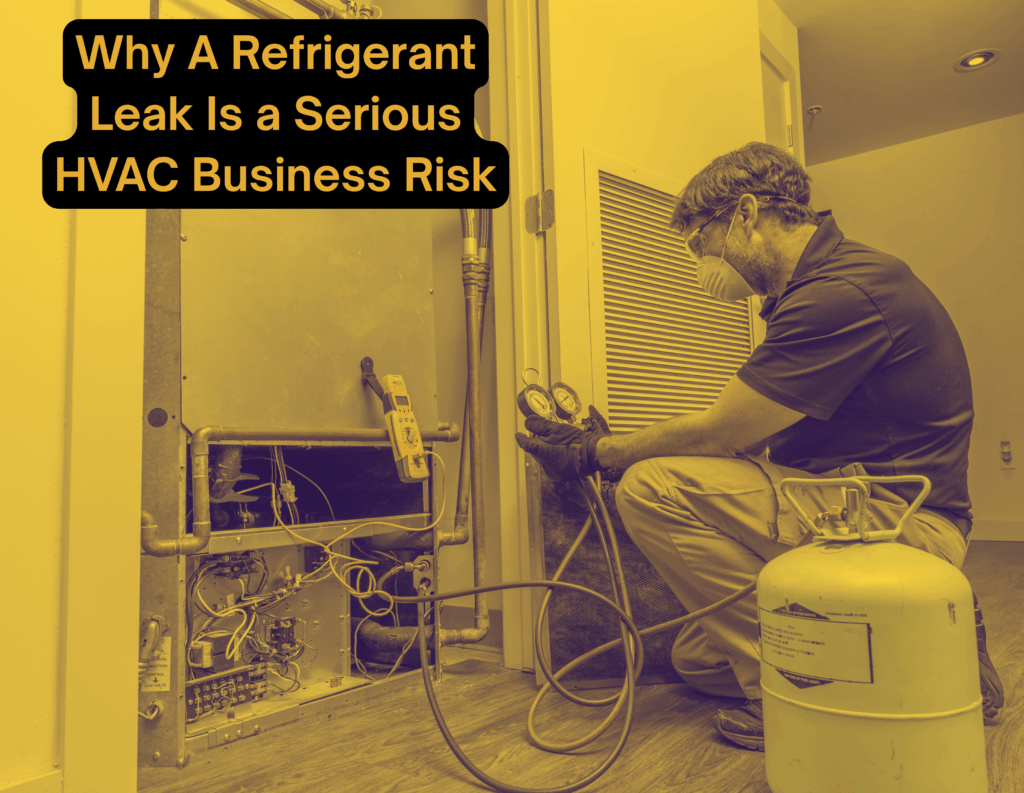
HVAC owners sometimes think of a refrigerant leak as a technical service problem.
In reality, one incident can affect several areas of the company.
A technician could suffer an eye injury or refrigerant burn. A system could be damaged by the wrong refrigerant or an improper charge. A customer could claim that the contractor’s work damaged the equipment or surrounding property.
The contractor may also lose refrigerant, labor, vehicle time, and revenue while correcting the problem.
There may be a regulatory issue as well.
EPA Section 608 requirements address the handling, recovery, recycling, reclamation, sales, and disposal of refrigerants used in stationary air conditioning and refrigeration equipment.
EPA guidance says certification is required for a person who could reasonably be expected to open the refrigerant circuit during maintenance, service, repair, or installation. The EPA also restricts the intentional venting of covered refrigerants, subject to limited regulatory exceptions. EPA Section 608 technician guidance
Refrigerant management should be part of hiring, training, dispatch, inventory control, service documentation, vehicle inspections, and management review.
Section 608 Certification and Technician Supervision

The first control is making sure the right employee is assigned to the work.
The appropriate Section 608 certification depends on the type of equipment being serviced.
EPA guidance also explains that a properly registered apprentice may perform certain work before obtaining certification only when closely and continuously supervised by a technician with the appropriate certification.
HVAC companies should maintain a current certification register containing each technician’s name, certification type, documentation, and employment status.
Certification should be confirmed before technicians are assigned work that may open a refrigerant circuit.
Purchasing credentials should also be controlled. A company should compare refrigerant purchases with truck inventory, recovered refrigerant, and completed work orders.
These procedures matter whether the company operates three service vans in Avon Park or has a larger fleet covering Lakeland, Davenport, and Kissimmee.
The Transition to New Refrigerants
Central Florida HVAC contractors are encountering more systems that use lower global warming potential refrigerants, including A2L refrigerants such as R 454B.
A2L refrigerants have different characteristics and safety considerations than the refrigerants many experienced technicians have handled for years.
Technicians should never assume that their previous procedures, tools, recovery equipment, or storage practices are appropriate for every new refrigerant.
Companies should confirm equipment compatibility, manufacturer instructions, tool ratings, recovery equipment requirements, leak detection procedures, ventilation needs, and employee training.
EPA rules covering HFC technology transitions have changed during the past several years, including updates finalized in 2026. Contractors should verify current requirements rather than relying on old social media posts or outdated supplier information. EPA Technology Transitions restrictions
Mixing or Misidentifying Refrigerants
Mixing refrigerants is one of the most expensive preventable mistakes an HVAC technician can make.
A technician may connect to a system without confirming the refrigerant type. A recovery cylinder may be labelled incorrectly. Hoses or equipment may contain residue from another refrigerant. A rushed technician may rely on the appearance of the equipment instead of reading the label.
The result could be contaminated recovered refrigerant, damaged HVAC equipment, inaccurate system readings, repeated callbacks, and wasted material.
Every company should establish a refrigerant identification and separation process.
Technicians should verify the equipment label before connecting gauges or recovery equipment. Recovery cylinders should be clearly identified, inspected, and tracked. The service record should identify the refrigerant recovered from or added to the system.
Proper Recovery and Refrigerant Documentation
Intentional venting of covered refrigerants is generally prohibited under federal law, subject to limited exceptions.
HVAC contractors should use proper recovery equipment and follow the requirements for the refrigerant, appliance, and work being completed. EPA stationary refrigerant management guidance
Good documentation protects the company even when a particular record is not required by regulation.
What a Refrigerant Service Record Should Include:
Equipment makes, model, and serial number
Equipment location
Refrigerant type
Initial system readings
Leak findings
Amount of refrigerant recovered
Amount of refrigerant added
Recovery cylinder identification when appropriate
Repairs completed and components replaced
Final operating readings
Before and after photographs
Customer recommendations
Work approved or declined by the customer
Technician name and completion time
A work order that only says “added refrigerant” leaves too many unanswered questions.
If a customer in Winter Haven, St. Cloud, or Sebring questions the repair later, the company should be able to show exactly what the technician found, recommended, completed, and verified.
Cylinder Storage and Commercial Auto Risks
Refrigerant cylinders travel through Central Florida heat inside service vehicles every day.
Damaged valves, missing labels, excessive heat, poor securement, or disorganized cargo areas can create dangerous conditions.
HVAC companies should create a service vehicle inspection process based on manufacturer safety information and applicable cylinder and transportation requirements.
Technicians should be trained to identify cylinder damage, protect valves, secure cylinders, organize cargo, and respond to suspected leaks.
Commercial auto insurance primarily addresses covered vehicle liability and physical damage exposures.
It should not be treated as automatic coverage for every recovery machine, tool, cylinder, or unit of refrigerant carried inside a service van.
If an HVAC van is stolen in Haines City or St. Cloud, the vehicle, shelving, tools, customer equipment, cylinders, and refrigerant stock may involve several different coverage forms.
Employee Safety and Workers’ Compensation
Refrigerant work can expose employees to pressure, temperature, chemical, electrical, lifting, fall, attic, fire, and ventilation hazards.
The correct precautions depend on the refrigerant, equipment, work environment, and task.
OSHA explains that employers must select appropriate personal protective equipment, ensure employees use it properly, and train workers on when it is needed, how to use it, its limitations, and proper care. OSHA personal protective equipment guidance
HVAC contractors should use current safety data sheets, manufacturer instructions, task specific hazard assessments, and appropriate training.
Workers’ compensation may apply when an employee suffers a compensable work related injury.
Examples could include a refrigerant burn, eye injury, cylinder lifting injury, fall from attic access, or vehicle related injury during work.
The best workers’ compensation claim is still the one prevented through training, personal protective equipment, supervision, and job planning.
How General Liability May Respond
General liability insurance may respond when an HVAC contractor’s operations or completed work cause covered bodily injury or property damage to someone else.
For example, a homeowner might allege that improper refrigerant service damaged the HVAC equipment or surrounding property.
Coverage is not automatic.
The policy may contain exclusions involving pollution, damage to the contractor’s work, impaired property, faulty workmanship, professional services, or other exposures.
A carrier may also determine whether the refrigerant meets the policy’s definition of a pollutant and whether a pollution exclusion applies.
The answer can depend on the substance, location, cause, timing, policy form, and endorsements.
HVAC contractors should never assume that every refrigerant incident is covered simply because they have general liability insurance.
Equipment Coverage and Refrigerant Stock
HVAC contractors carry expensive mobile equipment.
Recovery machines, vacuum pumps, leak detectors, gauges, ladders, specialty tools, and diagnostic equipment can add up quickly across several service vehicles.
Equipment coverage is commonly arranged through contractors equipment or inland marine insurance.
The policy may cover scheduled equipment, unscheduled tools, rented equipment, or employee tools.
However, limits, deductibles, valuation, theft restrictions, and unattended vehicle conditions can matter.
Refrigerant stock and cylinders should be discussed separately.
A policy covering a recovery machine does not necessarily cover the refrigerant stored beside it.
Customer equipment awaiting installation may require an installation floater instead of a basic tools and equipment limit.
Common Refrigerant Handling Mistakes
Sending an Unqualified Technician
Fast growth can tempt an HVAC owner to dispatch a new employee before verifying certification and supervision requirements.
Mixing Refrigerants
Poor labeling, contaminated hoses, and rushed procedures can ruin recovered refrigerant and damage customer equipment.
Using the Wrong Tools for A2L Refrigerants
Technicians should confirm that tools, recovery equipment, and procedures are appropriate for the refrigerant being handled.
Repeatedly Adding Refrigerant Without Diagnosing the Leak
Continually adding refrigerant without properly identifying and addressing the underlying problem can create callbacks, waste material, and weaken customer trust.
Writing weak service notes
“Added refrigerant” does not explain what the technician found, why refrigerant was needed, what repairs were completed, or whether the system was tested afterward.
Failing to secure cylinders
Service vehicle organization is a safety procedure, not a cosmetic issue.
Assuming insurance covers everything
General liability, workers’ compensation, commercial auto, and equipment coverage solve different problems. Pollution, faulty work, refrigerant stock, and customer equipment may still create gaps.
Action Steps for HVAC Business Owners
- Audit Technician Credentials
Confirm each employee’s certification, permitted work, training, and purchasing authority.
- Create an A2L Training Plan
Identify the refrigerants your technicians will encounter and train them using current manufacturer and safety information.
- Standardize Refrigerant Work Orders
Require refrigerant identification, quantities, readings, leak findings, repairs, photographs, and customer decisions.
- Reconcile Refrigerant Inventory
Compare purchases, truck stock, recovered refrigerant, and completed service records.
- Inspect Every Service Vehicle
Review cylinder condition, labels, valve protection, securement, tools, cargo organization, and emergency information.
- Review All Four Insurance Areas
Review general liability, workers’ compensation, commercial auto, and equipment coverage together.
Ask specifically about pollution exclusions, completed operations, tools inside vehicles, refrigerant stock, rented equipment, employee tools, and customer equipment.
- Create an Incident Response Plan
Technicians should know whom to call, how to protect people and property, how to preserve evidence, and how quickly management and the insurance agency must be notified.
Frequently Asked Questions
- Does Every HVAC Technician Need EPA Section 608 Certification?
EPA says certification is required when a technician could reasonably be expected to open the refrigerant circuit while maintaining, servicing, repairing, or installing stationary air conditioning and refrigeration equipment.
The appropriate certification depends on the equipment.
- Can an HVAC Contractor Intentionally Vent Refrigerant?
Federal law generally prohibits the intentional venting of covered refrigerants during maintenance, service, repair, and disposal, subject to limited regulatory exceptions.
Contractors should verify the current EPA requirements for the refrigerant and equipment involved.
- Does General Liability Cover a Refrigerant Leak?
General liability may respond to covered third party bodily injury or property damage.
However, pollution, faulty workmanship, damage to your work, and other exclusions may apply. The actual policy and endorsements must be reviewed.
- Does Commercial Auto Cover Refrigerant and Tools Inside a Service Van?
Not automatically.
Commercial auto may cover the vehicle and covered vehicle liability. Tools, cylinders, refrigerant stock, and customer equipment may require inland marine, property, installation floater, or other coverage.
- What Should an HVAC Contractor Document After Refrigerant Work?
Document the equipment, refrigerant type, quantities recovered and added, readings, leak findings, repairs, final testing, photographs, technician, and customer approvals or declined recommendations.
Protect Your Process and Your Insurance Program
Refrigerant risks for HVAC contractors cannot be solved by purchasing insurance alone.
They also cannot be solved through technical skill without documentation and management controls.
Strong HVAC companies verify technician qualifications, train employees, control refrigerant inventory, secure cylinders, use consistent service records, respond quickly to incidents, and review their insurance around the work they actually perform.
If your HVAC company serves Lakeland, Winter Haven, Haines City, Davenport, Kissimmee, St. Cloud, Sebring, Avon Park, Lake Placid, or nearby Central Florida communities, Wise Insurance Agency can help review your general liability, workers’ compensation, commercial auto, and equipment coverage for possible gaps.
The goal is not simply to have insurance policies.
The goal is to understand how your procedures and coverage work together before a refrigerant mistake becomes a major financial problem.